Perspective
AI Video Production Is Liberating the Indie Filmmaker
The industry reacts to AI with disgust. I see the opposite: a technology that hands creative power back to people who actually have something to say.
- AI video production does not cheapen the craft — it removes the barriers that stopped indie filmmakers from telling their stories at scale.
- The metric that matters is not the tool: it is whether you can move an audience. That bar is now clearable with AI.
- Direction is still everything. The technology amplifies creative vision; it does not replace it.
People assume I pivoted to AI video production for business reasons. The real reason is simpler and older than that: I grew up loving films, and AI is the first technology I have encountered that makes me feel the way I felt the first time I picked up a camera.
Where my relationship with film actually started
My brother and I watched the classics together growing up. Not as passive entertainment but as obsession: how did they do that, why does that shot feel that way, what is it about that cut that makes your chest tighten. That shared love eventually pushed me to make The Jigsaw, an indie film I built from scratch over a year of teaching myself filmmaking as I went. The film went on to win 50 awards globally. I am not saying that to impress anyone. I am saying it because it matters to the rest of this argument: I did not come up through the traditional production industry. I came through genuine love of the craft, and that is the lens through which I see everything that is happening right now with AI.
The reaction I keep getting from the industry
When freelancers and collaborators reach out to us now and learn that Sensa has pivoted to AI video production, a good number of them react with what I can only describe as genuine disgust. Like I have sold something. Like the craft has been betrayed. I understand the feeling. I do not share it, not even slightly, but I understand where it comes from. The production industry was built on a particular set of gatekeeping mechanisms: the cost of equipment, the size of a crew, the logistics of a location, the years of apprenticeship before anyone trusted you with a budget. For people whose identity and livelihood are tied to those mechanisms, a technology that dissolves them feels like an attack. What I want to argue is that it is the opposite.
The only metric that actually matters
There is one question I keep returning to as a filmmaker: can you move an audience? Can you make them feel something before they think something? That is the job. Everything else, the camera package, the size of the crew, the number of shooting days, is infrastructure. Infrastructure is not the point. When the technology reached a level where a piece of AI video production could genuinely, emotionally land with a viewer who cannot tell it from traditional film, that was the moment. Not a rough proof of concept. Not an interesting demo. A real, finished piece of work that functions as cinema. That moment arrived, and we went all in.
The Film Spoke: the moment I knew
The clearest evidence I can point to is a commercial I produced called The Film Spoke. The idea arrived in my head fully formed, the way a good idea does, and I was able to create it in less than a day. Not a sketch. Not a rough cut. A finished piece with a level of production value I would have needed a full crew and multiple shooting days to achieve through traditional means. You can watch it here: https://www.youtube.com/watch?v=8fVgUfHyRgw
What made it possible was layering: image prompting skills built through real practice, script skills developed over years of writing, system prompts feeding into system prompts feeding into system prompts, combined with start frames, end frames and reference image generations to control the output with precision. This is not pressing a button and waiting. It is direction. It is craft applied at every decision point.
There is a farmer in that film. And somewhere in the middle of making it, I caught myself doing something I did not expect: I was directing him. Adjusting his performance, his physicality, the quality of light on his face, the pace of his movement through the frame. Exactly as I would direct a real actor on set. That realisation landed quietly and then it landed hard. The tool had changed. The directing had not.
Why this is about the indie filmmaker, not the studio
The traditional production industry’s relationship to cost is not neutral. High production costs have always functioned, whether intentionally or not, as a filter. They separate people with access to capital from people with a vision and nowhere to put it. I built The Jigsaw by learning everything myself because I could not afford to do it any other way. That experience is not unusual. Most of the best creative instincts in filmmaking never reach an audience because the infrastructure cost acts as a wall before the story ever gets to stand or fall on its own merits. AI video production does not just reduce that cost. It effectively removes the wall. When the only limitation is your imagination, and the technology is substantially there right now, you are no longer asking permission from a budget. You are asking permission from your own craft. That shift is profound. It is not a threat to filmmaking. It is its most significant democratic moment.
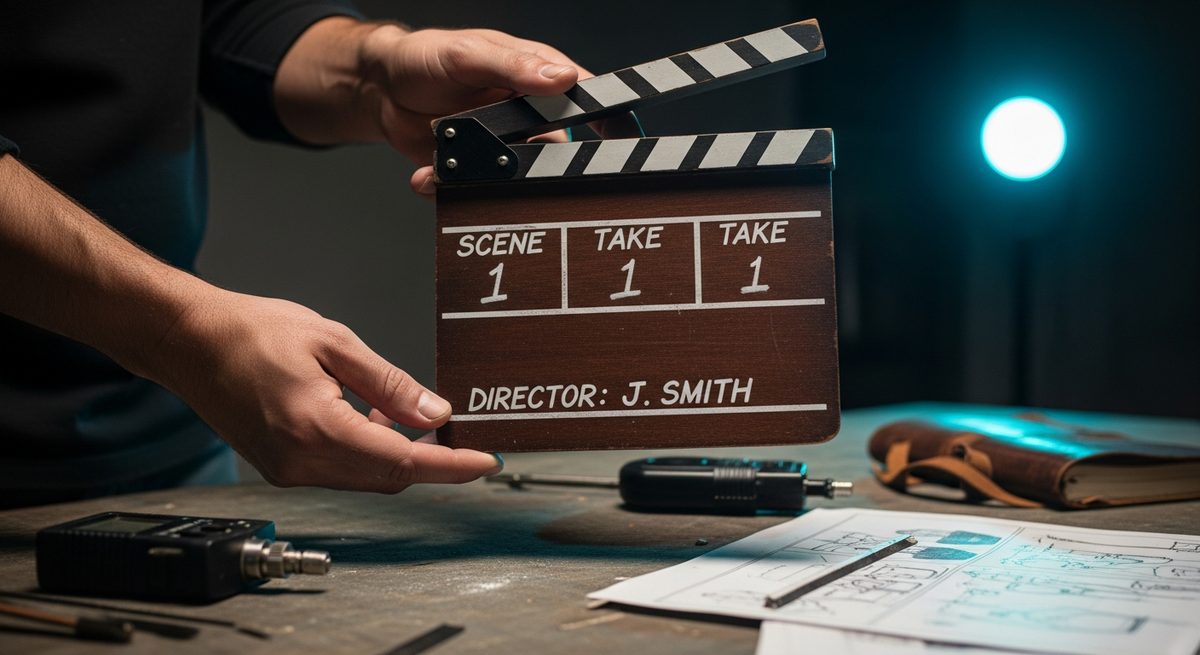
Curious what AI video production looks like at production-house quality? See the work → AI video production company
Direction is still the differentiator
Here is what I want to be precise about, because this point gets lost in most conversations about AI. The technology does not make bad creative decisions good. It amplifies whatever is in front of it. A weak concept, a shapeless script, a vague visual idea: AI renders those at high resolution just as faithfully as it renders a strong one. The difference is invisible to the tool and obvious to the audience. What that means in practice is that direction matters more now, not less. The ability to hold an intention for a frame and pursue it through every decision, the shot, the light, the lens choice, the grade, the pace of the edit, is the only thing that separates work that lands from work that looks impressive and means nothing. At Sensa, that is what we protect. Our own studio software gives us frame-by-frame control precisely because the creative decisions need to go somewhere. Removing human direction from AI video production is not efficiency. It is how you get work nobody feels anything watching.
Where this is going, and why I am not anxious about it
I am often asked whether I think AI will replace filmmakers. It is not the question I find interesting. The question I find interesting is what filmmakers with genuine vision will build once the cost and logistics of production are no longer the determining factor in whether a story gets told. I think the answer is that the next decade of cinema, commercial and otherwise, will be defined by people who have something real to say and the craft to say it precisely. The gatekeeping function of production cost is dissolving. What replaces it is creative ability and directorial control, the things that always should have been the filter. I came into this industry from outside it, built something from nothing because the story mattered enough to figure out how, and watched that approach win fifty times over. AI is not a threat to that instinct. It is its most powerful expression yet.
What changes with AI. What does not.
Removed by AI
Still everything
The infrastructure changed. The directing did not.
The infrastructure of filmmaking is being dismantled. The creative responsibilities remain exactly where they always were.
I was directing him. Adjusting his performance, the quality of light on his face, the pace of his movement through the frame. Exactly as I would direct a real actor on set. The tool had changed. The directing had not.
Sensa Productions is a global AI video production house: an award-winning studio that creates bespoke, brand-accurate films with hybrid AI and human craft, directed frame by frame. If you want to see what that looks like in practice, start with the work. If you are ready to make something, let us talk.